
Can the USA maintain its leading role in global finance?
For over 100 years the USA has been the leader in world finance. Wall Street set the scene, and other centers, first and foremost London, took their cue, and their opportunities from New York's innovations, and shortcomings. Wall Street, too, led the world into the global financial crisis, it invented 'securitization' (a term coined by Lewis Ranieri in 1977*), and accommodative monetary policy provided a framework for its excesses.
Now, the United States faces the twin challenge of inventing a new regulatory framework, without killing the innovation of the US financial industry while having to grapple with a fiscal deficit of alarming proportions. This difficulty, and opportunity, falls to the Obama administration, for the next three years at least.
FCI's first issue will ask how Obama's administration is likely to grapple with this, whether the US is likely to remain the leader in world finance afterwards, or if the mantle of global finance leader will pass to another financial center.
The first issue of FCI will identify that other potential financial center, and will spell out the implications for other centers of this possibility. It will also set out priorities for US regulators in responding to the crisis, if America is to maintain its leadership.
The United States of America hosts not merely one of the world's mega-centers in New York but also a variety of key regional centers with different emphases on strategic niches such as Boston in funds management and Atlanta in energy, and some key credit derivatives. It's centers also host the world's largest exchanges and many of North America's financial centers outside of New York boast strong exchanges for example Chicago, and, in Canada, Toronto and Vancouver. Washington today looms as perhaps the most important of all financial centers in the USA - and how Washington rules in the months and years to come will greatly influence how America's leadership will fare.
*In a 'Heard on the Street' column Wall Street Journal interview. Recounted by Ranieri in 'A Primer on Securitization', 1996, Massachusetts Institute of Technology. (A book of contributions from 14 of the 'founders of securitization', based on a 8 week colloquium on the then relatively new technique at the Kellogg School of Management at Northwestern University in 1994).
Now, the United States faces the twin challenge of inventing a new regulatory framework, without killing the innovation of the US financial industry while having to grapple with a fiscal deficit of alarming proportions. This difficulty, and opportunity, falls to the Obama administration, for the next three years at least.
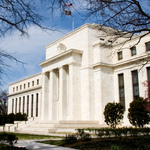 |
| The United States faces the twin challenge of inventing a new regulatory framework, without killing the innovation of the US financial services industry |
FCI's first issue will ask how Obama's administration is likely to grapple with this, whether the US is likely to remain the leader in world finance afterwards, or if the mantle of global finance leader will pass to another financial center.
The first issue of FCI will identify that other potential financial center, and will spell out the implications for other centers of this possibility. It will also set out priorities for US regulators in responding to the crisis, if America is to maintain its leadership.
The United States of America hosts not merely one of the world's mega-centers in New York but also a variety of key regional centers with different emphases on strategic niches such as Boston in funds management and Atlanta in energy, and some key credit derivatives. It's centers also host the world's largest exchanges and many of North America's financial centers outside of New York boast strong exchanges for example Chicago, and, in Canada, Toronto and Vancouver. Washington today looms as perhaps the most important of all financial centers in the USA - and how Washington rules in the months and years to come will greatly influence how America's leadership will fare.
*In a 'Heard on the Street' column Wall Street Journal interview. Recounted by Ranieri in 'A Primer on Securitization', 1996, Massachusetts Institute of Technology. (A book of contributions from 14 of the 'founders of securitization', based on a 8 week colloquium on the then relatively new technique at the Kellogg School of Management at Northwestern University in 1994).